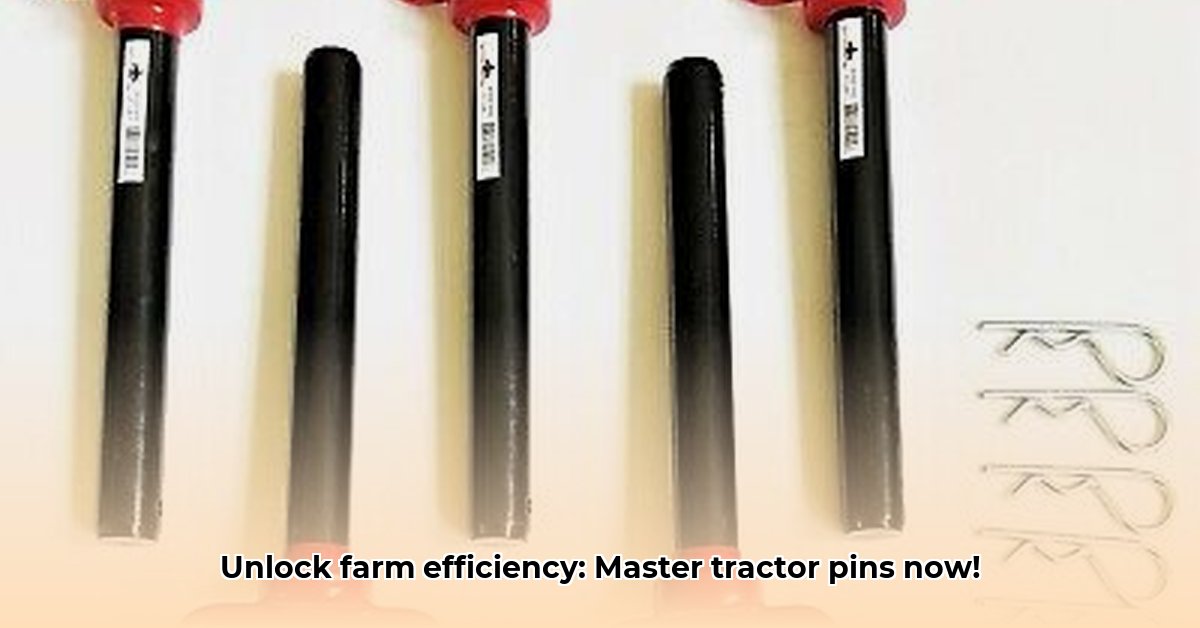
Tractor Pins: The Unsung Heroes of Your Farm
Let's talk about tractor pins – those often-overlooked metal cylinders that quietly keep your farm equipment humming. They might seem insignificant, but these small components are essential for smooth operation, preventing costly downtime, and contributing to a more sustainable farm. Ignoring them risks breakdowns, leading to significant losses in productivity and income. This comprehensive guide will help you understand, maintain, and replace them effectively. But first, let's consider a key question: How much does unplanned tractor downtime actually cost your operation per hour? The answer, often surprisingly high, underscores the importance of proactive pin maintenance.
Understanding Tractor Pin Types
Several types of tractor pins exist, each designed for a specific application. Knowing the difference is crucial for efficient operation.
Common Tractor Pin Types
- Clevis Pins: (pins with a head on one end for easy removal) These are frequently used in hitches and linkages, enabling equipment maneuverability.
- Hitch Pins: (pins connecting implements like trailers to the tractor) These come in various sizes and designs, each with a specific weight capacity. Always choose a hitch pin rated for the weight of the attached implement.
- Cotter Pins: (small pins used to secure other pins) These prevent accidental removal or slippage, ensuring safety and component integrity.
- Tapered Pins: (pins designed for applications demanding extra strength) These fit snugly into tapered holes, resisting vibration and stress.
Inspecting Your Tractor Pins: A Preventative Maintenance Checklist
Regular inspection is crucial for preventing small problems from becoming major headaches. Catching a problem early saves time, money, and hassle. Here’s a step-by-step process:
- Visual Inspection: Carefully examine each pin for bending, cracks, excessive wear, or corrosion. Rust significantly reduces lifespan.
- Movement Check: Gently wiggle the pin. Significant movement indicates wear and tear.
- Precision Measurement: (using calipers) Compare measurements to manufacturer specifications; discrepancies suggest the pin might need replacing.
Lubrication for Extended Pin Lifespan
Proper lubrication is key to extending pin life. A well-lubricated pin moves smoothly, resisting wear and tear. Use a high-quality lubricant designed for your machinery and wipe off excess grease.
Replacing a Worn Pin: A Step-by-Step Guide
When replacement is necessary, follow these safety precautions:
- Safety First: Always disconnect the power source before starting maintenance. Wear safety glasses and gloves.
- Careful Removal: Use appropriate tools (hammer, punch, puller) to avoid damaging surrounding components.
- Smooth Installation: Insert the new pin, ensuring correct fit and secure seating with cotter pins or locking mechanisms.
Troubleshooting Common Issues
Several problems may indicate pin issues:
- Difficult Implement Movement: Worn or damaged pins hinder movement, impacting fuel efficiency.
- Excessive Noise: Squeaking, grinding, or clicking suggests a sticking or damaged pin. Try lubrication; replacement may be necessary.
- Pin Shearing: This indicates overload; consider upgrading to a heavier-duty pin.
The Sustainability Connection: Small Actions, Big Impact
Proper pin maintenance contributes to sustainable farming practices. Reduced downtime minimizes fuel consumption, reducing your farm's carbon footprint. Extending equipment lifespan reduces waste and material needs, illustrating the link between sustainable agriculture and seemingly minor maintenance tasks. "Proper maintenance practices, including pin inspection and replacement, can significantly extend the operational life of agricultural equipment," explains Dr. Emily Carter, Agricultural Engineer at Purdue University.
Conclusion: Prioritize Pin Maintenance for a Thriving Farm
Regular inspections, proper lubrication, and prompt replacements ensure years of trouble-free operation. Proactive maintenance saves time, money, and reduces environmental impact. Make tractor pin maintenance a regular part of your farm routine.